


As November brings increased attention to childhood grief, a Lincoln nonprofit is reminding families that help is available at no cost, regardless of the circumstances surrounding the death of a loved one.
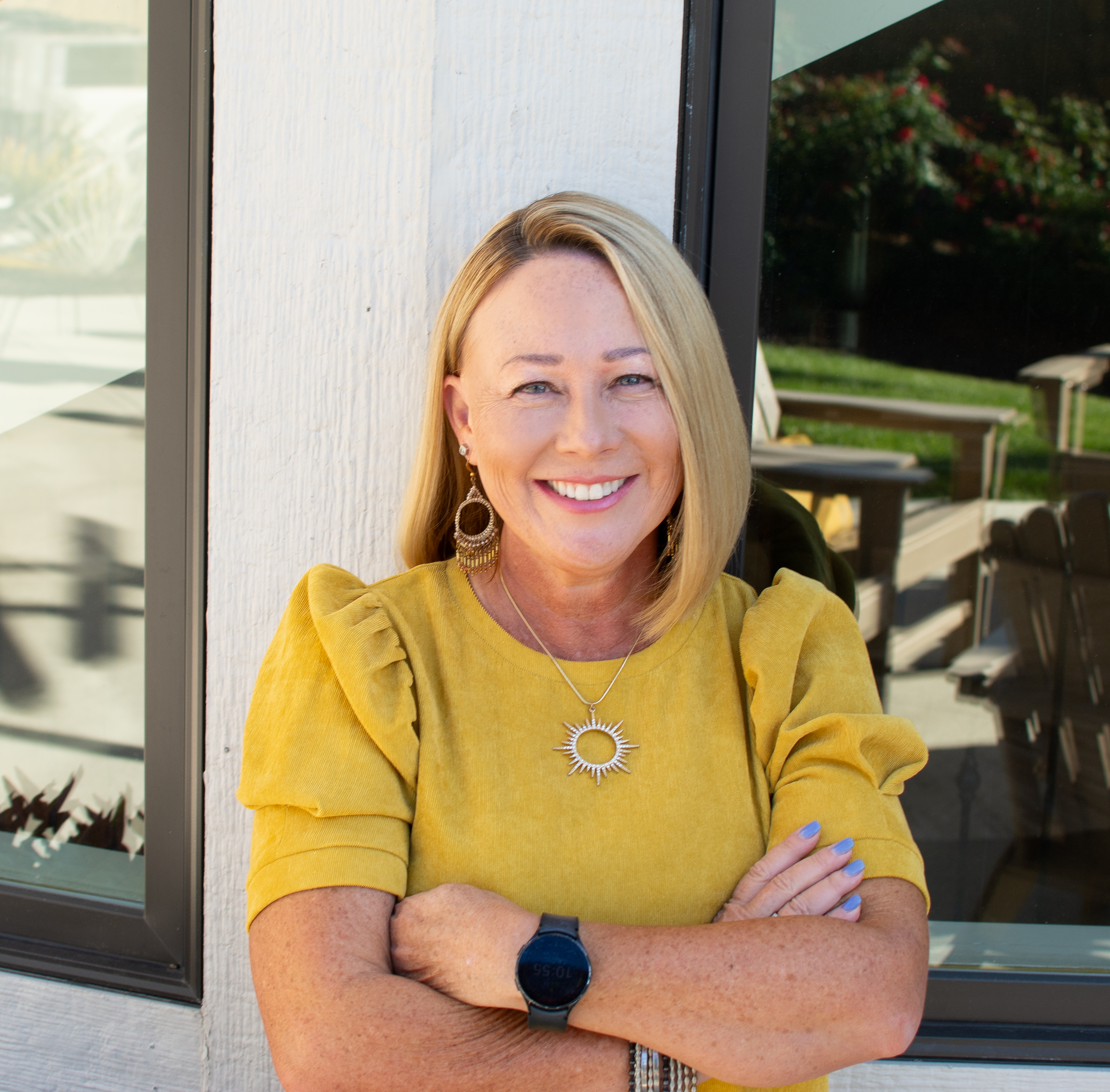
Executive Director
Carly Woythaler-Runestad, MHA
Carly Woythaler-Runestad, executive director of Mourning Hope Grief Center, told Jack Mitchell on KLIN’s Drive Time Lincoln that the organization wants families to know about its services before they experience a loss.
“What we don’t want to have happen is for people to find out about Mourning Hope long after they needed it,” Woythaler-Runestad said.
Founded in 1994, Mourning Hope provides grief counseling, peer support groups, camps and other services for children, teenagers, young adults and adults who have experienced the death or serious illness of someone close to them.
All services are provided free of charge.
Woythaler-Runestad said support is tailored to individual circumstances. Some families participate in 10-week peer support programs, while others receive individual counseling or attend specialized camps.
The organization also offers men’s grief support and Sunday evening programming for young adults ages 19 to 30.
Awareness activities planned this week
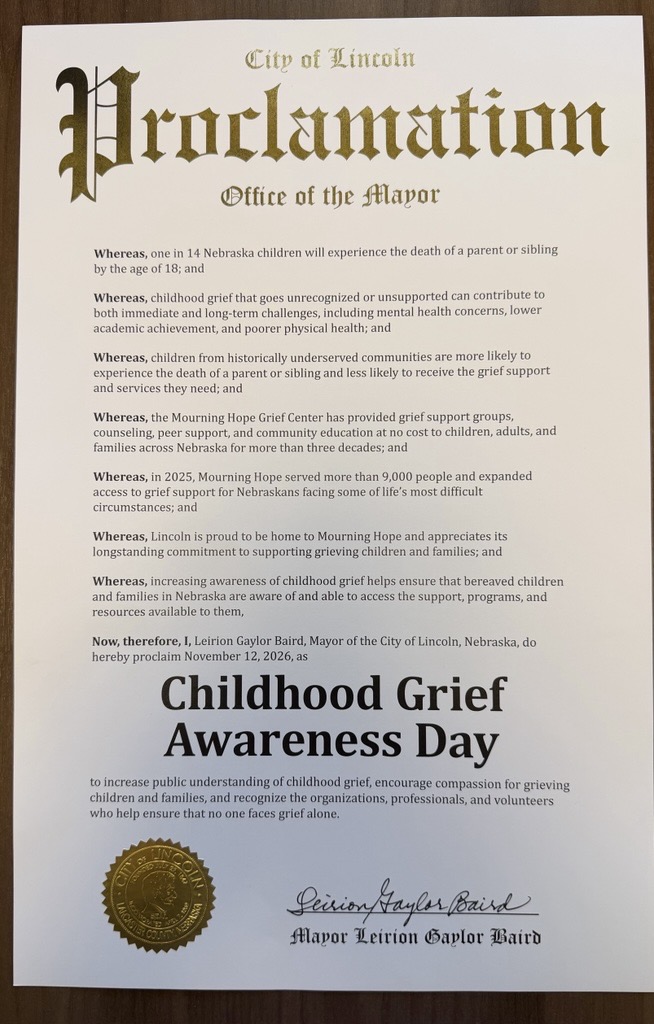
Proclamation, Mayor Leirion Gaylor Baird
Woythaler-Runestad said Thursday, November 12, will be recognized locally as Childhood Grief Awareness Day, with special activities and speakers addressing grief, culture and identity.
Mourning Hope is also planning a giving day Saturday, November 14.
She said the awareness campaign is intended to help people recognize that grief support is available when they need it.
Hundreds of volunteers support the mission
Despite operating with a relatively small staff, Mourning Hope serves thousands of people annually.
Woythaler-Runestad credited the organization’s approximately 200 to 300 volunteers with making that possible.
Volunteers assist with support groups, overnight camps, meals, sewing memorial pillows from clothing belonging to deceased loved ones, building maintenance and other activities.
Grief support remains limited in rural areas
While specialized grief centers are expanding nationally, Woythaler-Runestad said significant gaps remain, particularly in rural communities.
She pointed to established grief centers in Lincoln and Omaha, but said families farther west have fewer nearby options.
The need for expanded rural services, she said, remains a challenge across the country.
Grief is not a predictable process
Woythaler-Runestad also challenged the common assumption that people should eventually get over the death of someone they love.
“It’s not linear. We’re moving in and around, and it’s changing all the time,” she said.
Rather than expecting grief to disappear, she said people can learn ways to incorporate the loss into their lives while maintaining meaningful connections to those who have died.
For children especially, connecting with peers who have experienced similar losses can help reduce feelings of isolation.
Mourning Hope’s goal, she said, is to ensure that nobody has to grieve alone.
Families interested in services or volunteer opportunities can visit Mourning Hope’s website to find information about available support.
Listen to the full interview with Carly Woythaler-Runestad at KLIN’s Drive Time Lincoln.